Medical Health Desk
Joint Pain Edition - Independent Health Research · May 2026
— Joint Health · Research Report
Looking for an Alternative to Knee Replacement? Harvard Research Points to a Natural Protocol That's Already Working for Thousands
According to the American Academy of Orthopaedic Surgeons, over 790,000 knee replacements are performed in the US every year. But a growing body of research — including a Harvard clinical trial with 4,000 participants — suggests surgery may not be the only path forward. Watch the short presentation below to see what researchers found
Most treatments for bone-on-bone knee pain address the symptoms — not the underlying cause of joint breakdown. Harvard researchers identified a specific mechanism behind cartilage loss and reduced joint lubrication, and a natural at-home protocol that supports the body's own repair process. No surgery. No prescriptions. No side effects.
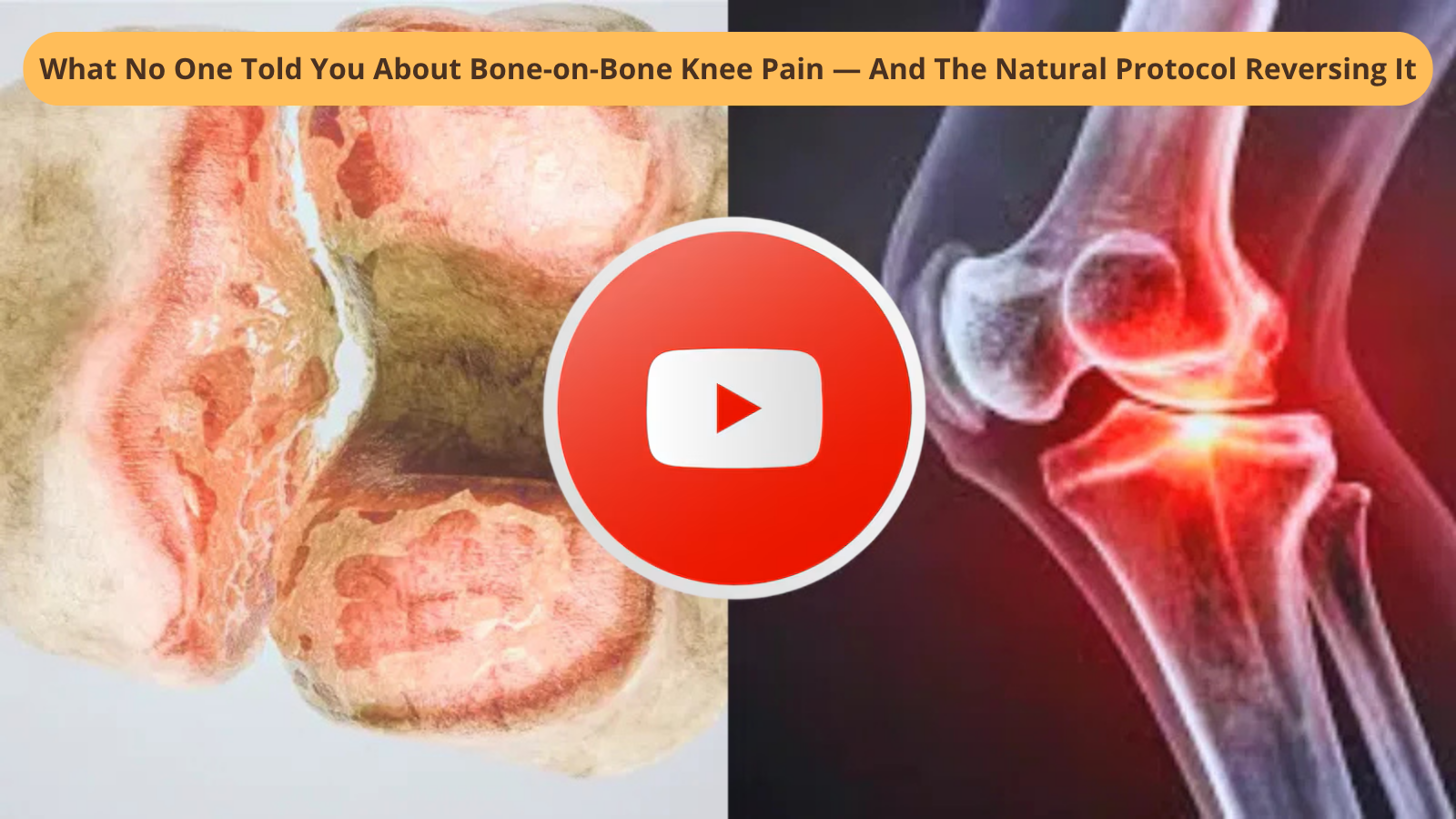
47,000+ people watched this presentation in the last 30 days
More than 4,000 Americans with bone-on-bone knee damage — including patients in wheelchairs who were told joint replacement was their only option — participated in the Harvard clinical trial confirming this natural at-home protocol works.
Why Knee Injections Keep Failing
Anti-inflammatory injections reduce inflammation temporarily — but they do nothing to stop the compound actively destroying your cartilage and drying up your synovial fluid. In bone-on-bone cases, where the protective cushion is already gone, injections cannot rebuild what's been destroyed. They mask the grinding. They do not stop it.
Harvard research confirmed that repeated injection use may contribute to further cartilage breakdown over time. The relief window often gets shorter with each treatment..
Addressing the underlying cause of joint damage — before attempting to rebuild — is what distinguishes this protocol from conventional approaches.
Breakthrough Study Results:
Harvard Clinical Trial with 4,000+ Participants — 2025:
89%
Significant stiffness, heat & swelling reduction — first week
84%
Resumed normal daily activities pain-free — week 2
92%
Dramatic pain relief — week 4, including wheelchair users
Six-month follow-up X-rays and MRIs showed progressive improvement in joint structure — including changes in cartilage and synovial fluid levels — in participants who stayed on the protocol.
What People Are Reporting After Watching the Presentation

Robert M.
64 years old · Mississippi
"For 10 years, my right knee was a 12 out of 10. It would lock up getting out of bed. Stepping onto the tractor felt like somebody driving a nail into it. Now I jump fences. I walk my land without thinking about my knee. The pain's gone. Zero."

Linda S.
58 years old · Alabama
"For 17 years, my right knee was bone on bone. It hurt so bad it would wake me up five or six times a night. Getting into the car, I had to physically lift my leg. Now I bike three or four times a week. I'm back to kickboxing. No pain. None."

James T.
71 years old · Louisiana
"Bone on bone in both knees. No cartilage left. My legs were bowed out, they hurt all the time. Just walking across my clinic was exhausting. Now I walk straight again. No pain, none. My knees just feel completely normal again."
Don't Wait — The Window for Repair Narrows Every Month
Without removing the compound causing the damage, cartilage destruction continues 24/7 — increasing your risk of $30,000–$50,000 knee replacement surgery and narrowing the window for natural joint recovery. Research confirms that earlier intervention supports better outcomes. The later the damage is addressed, the fewer non-surgical options remain.
Frequently Asked Questions
Is this method safe? Will it help with bone-on-bone knee pain?
Yes. This natural at-home protocol uses compounds backed by Harvard clinical research. It's non-invasive, drug-free, and designed to support the body's own repair process. Thousands have used it with zero reported side effects. It was specifically tested in participants with severe bone-on-bone degeneration — including wheelchair users.
How soon will I feel a difference?
In the Harvard trial, 89% of participants reported significant reduction in stiffness, heat, and swelling within the first week, and 84% resumed normal daily activities within two weeks. Progressive improvement — tracked by X-ray and MRI — develops over three to six months as the body supports cartilage health and joint lubrication.
Is it safe alongside my current medications?
Yes. The protocol is 100% natural with no known interactions with blood pressure or cholesterol medications. No common allergens, no artificial additives.
Is it approved by doctors?
While it's not a prescription treatment, the protocol is based on Harvard clinical research, and has been used by thousands of people across the US. Many orthopedic surgeons and functional medicine doctors are now recommending it as a non-surgical option.
Break Free from Knee Pain—Starting Tonight
Watch the free presentation to discover the natural at-home protocol that's reversing joint damage for thousands across America.
The video reveals:
✅ The exact toxic compound destroying your knee — and where it comes from
✅ Why painkillers and cortisone injections don't address the real cause
✅ The two natural compounds that clear the toxin and restart joint repair
✅ Real testimonials from people who reversed years of bone-on-bone damage
✅ Full Harvard clinical trial evidence — including X-ray and MRI results
✅ How to access this natural at-home protocol today
Scientific References
- American Academy of Orthopaedic Surgeons (AAOS). Projected Volume of Primary and Revision Total Joint Replacement in the U.S. 2030 to 2060. AAOS Annual Meeting, 2023. Available at: aaos.org
- Wernecke C, Braun HJ, Dragoo JL. The Effect of Intra-articular Corticosteroids on Articular Cartilage: A Systematic Review. Orthop J Sports Med. 2015;3(5). doi:10.1177/2325967115581163
- Deyle GD, Allen CS, Allison SC, et al. Physical Therapy versus Glucocorticoid Injection for Osteoarthritis of the Knee. N Engl J Med. 2020;382(15):1420-1429. doi:10.1056/NEJMoa1905877
- Skou ST, Roos EM, Laursen MB, et al. A Randomized, Controlled Trial of Total Knee Replacement. N Engl J Med. 2015;373(17):1597-1606. doi:10.1056/NEJMoa1505467
- National Institute of Arthritis and Musculoskeletal and Skin Diseases (NIAMS). Osteoarthritis: Overview. U.S. Department of Health and Human Services. Available at: niams.nih.gov
- Jørgensen TSH, Hansen AH, Fink-Jensen A, et al. Non-surgical management of knee osteoarthritis: a systematic review. BMJ Open. 2022;12(2). doi:10.1136/bmjopen-2021-052734
MEDICAL & HEALTH DISCLAIMER: The information and other content provided on this page, or in any linked materials, are not intended and should not be construed as medical advice, nor is the information a substitute for professional medical expertise or treatment.
If you or any other person has a medical concern, you should consult with your health care provider or seek other professional medical treatment. Never disregard professional medical advice or delay in seeking it because of something that you have read on this page or in any linked materials. If you think you may have a medical emergency, call your doctor or emergency services immediately.
Individual results may vary.
This content is for educational purposes only and is not intended to diagnose, treat, cure or prevent any disease. Always consult your physician.
Paid advertisement – not a news article.